The Architecture of Choice; When Your Decisions Are Being Designed
Who decides for you? Yourself? Or someone else? This is a question that may seem obvious at first glance, but in the contemporary world, the answer reveals disturbing layers.
The period of quarantine and the COVID pandemic was a valuable opportunity for me to return once again to the world of books, free from the noise of everyday life. Among the works I read during that period, The Age of Surveillance Capitalism by Shoshana Zuboff gained a special place for me. Although I have worked professionally for years in the fields of computer science, networks, and modern systems, and am fully familiar with the infrastructures and technical concepts of these tools, I found this work to be far beyond a merely technical or economic analysis.
The value of this book lies in the fact that it does not merely confine itself to the role of companies in markets and profitability, but with remarkable precision examines the impact of these systems on the management of human thought. Zuboff reveals the emergence of a new kind of power; a power concentrated in structures whose expertise is to know, predict, and ultimately gradually direct our behavior.
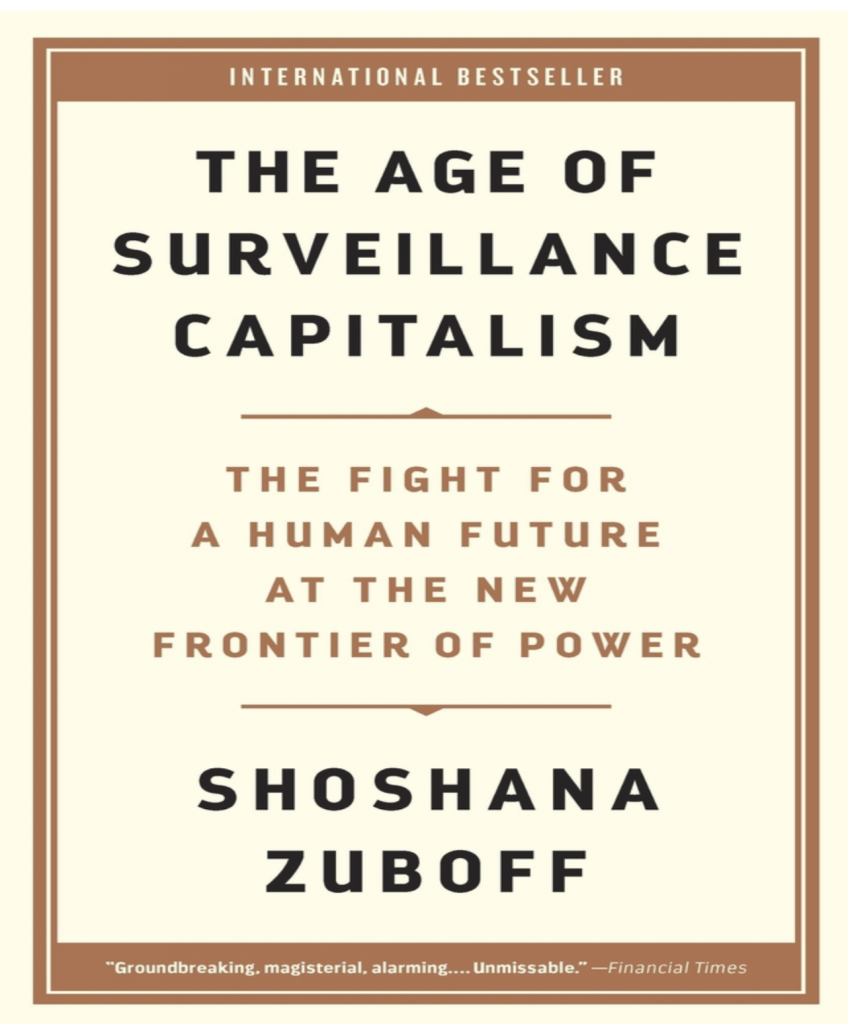
Among all these analyses, one fundamental question is repeated throughout the book in different forms, which Zuboff expresses in a short and striking phrase:
“Who decides what to decide?”
That is, who decides what is to be decided about?
This proposition in fact reveals one of the deepest layers of Zuboff’s critique. The issue is no longer merely what decision is ultimately made; the more important and more fundamental question is who determines what subject is even allowed to enter the field of our decision-making, and what subject is removed from the agenda of our minds and lives from the very beginning. This is no mere wordplay, but a direct reference to the hidden core of power in the contemporary world.
This sentence appears simple on the surface, yet within it are concealed at least two important and decisive levels. At first glance, the question is: who decides? But Zuboff goes one step further back and reveals a deeper layer: who determines what things are to become subjects of decision-making in the first place? That is, what options are placed before us, what is considered “choosable,” and what matters never even occur to our minds.
Here we are confronted with a major transformation: the passage from decision-making to the design of decisions. In the past, human beings chose among options that had emerged in natural, social, or political contexts. The framework of choice, however imperfect, was to some extent the product of collective experience and the ordinary processes of society. But today, this very framework is itself designed—designed by algorithms, platforms, and giant technology companies.
To understand this better, a simple example is enough. Suppose you want to watch a video on YouTube. You imagine that you are choosing freely, but in reality, before you make your decision, the algorithm has already decided what will be shown to you, what will remain hidden, and what content will repeatedly appear before your eyes. Outwardly, you choose. In reality, you are moving within a pre-engineered space.
Zuboff’s central point is precisely here: real power no longer lies only in “making decisions,” but in defining the field of decision itself—that is, determining the boundaries of what may be seen, heard, desired, and chosen.
And this is exactly where the matter becomes dangerous. For if the field of choice is designed by invisible and unaccountable forces, human freedom remains only in appearance. To understand the depth of this danger, it must be examined on several essential levels.
1. The Illusion of Freedom
Modern man believes he is free because he chooses, clicks, votes, and expresses opinions. But the essential issue is that the options have already been limited, prioritized, and arranged before he even enters the stage. Freedom remains in appearance, but the field of choice has already been designed.
2. The Unconscious Shaping of the Mind
If a person is exposed only to a specific set of information, narratives, and images, he gradually comes to believe that those alone are reality. What is not seen is slowly removed from the sphere of awareness. The mind, without realizing it, begins to think within a limited frame.
3. Invisible Power
In the past, power had an obvious face: the state, the army, the law, official censorship. But today, a more significant form of power has emerged—a power that acts invisibly. This power lies in the design of systems, in algorithms, in the architecture of platforms, and in the method of distributing information. It is unseen, yet its effects are everywhere.
4. Politics and Democracy
When some news is seen more often, some viewpoints are strengthened, and others are not seen at all, the political decisions of people are gradually engineered as well. In such conditions, the appearance of democracy is preserved, but the path through which public will is formed has been manipulated.
The Great Difference from the Past
In the past, power said: “Do this.”
Today, power makes you want to do it yourself.
This form of domination is far deeper and more dangerous, because the individual feels no coercion. He imagines that the desire, decision, and choice are his own, while the conditions in which that desire was formed have already been engineered.
Thus we conclude that the issue is no longer who decides instead of us. The issue is who determines what we think about at all, what we consider important, and what subjects we decide upon. When the field of decision-making has been designed in advance, freedom of choice resembles illusion more than reality.
From Technology to Politics: The Decisive Point
This is where Zuboff’s discussion goes beyond a merely technological critique and becomes an entirely political—and even fateful—issue. When we ask, “Who determines what the subject of decision is?” we are no longer speaking merely about choosing among options. We are speaking about constructing political reality.
1. Integrity in Political Decision-Making
In a healthy and democratic situation, people have access to relatively diverse information, the main issues of society emerge from social reality, and citizens make decisions with relative awareness. That is, the field of decision-making is to a large extent real, shared, and visible.
2. What Happens in Surveillance Capitalism?
Here, the issue is no longer what decisions people make. The issue is who determines what people are to decide about.
3. First Stage: Defining the Political Issue
In politics, the most important thing is not always the answer; more important than that is the question itself.
Is the main issue of society security?
Or freedom?
Or the economy?
Or security and identity?
In the past, these questions emerged from social experience, diverse media, parties, and civil institutions. But today, algorithms and digital mechanisms can determine what is seen as an “important issue” and what is not seen at all.
Suppose a society faces a severe economic crisis, but in digital space most content is focused on “security threats” or “cultural issues.” As a result, the public mind is drawn in that direction, and political decisions are formed around those same subjects. The main point is that the real issue has been displaced, without people realizing that the original issue—the economic crisis—has been forgotten and replaced by another issue such as “security threat” or “cultural matters.”
4. Second Stage: Constructing Discourse
Discourse is a framework of language, meaning, values, concepts, and narratives that determines how people see a phenomenon, how they think about it, and how they speak about it. In truth, it is the framework within which people understand the world. But in algorithmic systems:
Some narratives are amplified.
Some narratives disappear.
Some voices grow louder.
Some are never heard.
The result is the formation of an engineered reality that becomes the dominant discourse of society.
5. Where Is the Main Danger?
The danger is not that people make mistaken decisions. The danger is that people make decisions within a framework that has been designed in advance; they vote on a subject about which they neither possess complete information nor even know what they have fundamentally not seen.
6. The Collapse of Integrity in Political Decision
Under these conditions, the decision appears democratic: people vote, express opinions, and participate. But the process through which that decision is formed has been manipulated. The appearance remains; the substance has been weakened.
7. Difference from Traditional Propaganda
In the past, propaganda tried to persuade you to reach a particular conclusion. Today, the system ensures that you never encounter certain ideas at all. Therefore, the issue is no longer persuasion; the issue is the elimination of alternative fields of awareness.
Politics in the New Era
Politics is no longer merely the arena of competition among ideas. We have entered a stage in which politics has become a competition over the control of the field of perception.
The issue today is not what decisions people make.
The issue is who determines what people are to decide about.
In today’s world, power is no longer held only by politicians or political parties. Power lies where it is determined what shall be seen, what shall be heard, and even what shall reach our minds at all.
You believe that you are choosing, but in reality you are moving within a field that has already been designed in advance. The field of decision-making has been arranged before your arrival.
And when the field has already been arranged, the final result is no longer all that important.
If we look carefully at what Shoshana Zuboff presents in her book The Age of Surveillance Capitalism, we can better understand how this process functions in politics, and how certain figures suddenly become transformed into “important options.”
1. How Does Sudden Elevation Occur?
In the digital sphere, there are at least three principal mechanisms:
A) Algorithms (Recommendation Systems)
Algorithms determine:
- What is seen more often
- Who is recommended more often
- What topic becomes trending
- What content is repeatedly placed before the eyes of the user
If a figure is constantly placed before your view, that person is gradually registered in your mind as an “important option.” This mental impression is not necessarily the result of merit, but of visibility.
B) The Repetition Effect
When you continuously see the name or image of a person on X, YouTube, Instagram, and other media, the human mind unconsciously interprets that person as important, credible, or socially weighty.
Even if there is no clear objective reason for such a judgment, the repeated sight of a person or an image by itself creates legitimacy for them.
C) Amplification Networks
When several large pages, several influencers, and several media outlets simultaneously speak about one person, an artificial wave is created that appears to the audience as broad and natural support for that person.
Whereas what is being seen may be less the result of genuine public will than of media coordination.
2. How Does a Celebrity Become Political?
In the past, entry into politics usually required party background, years of organizational experience, possession of a political program, institutional knowledge, or intellectual foundations.
But today, in many cases, visibility itself has become political capital.
The stages of this process are usually as follows:
- A person already known as a sports, artistic, media, or entertainment figure
- Enters a political issue
- Algorithms amplify that person’s presence
- The audience concludes: “Then this voice must be important in politics.”
All this without that person necessarily possessing political expertise, party experience, governing experience, historical understanding, or the ability for political planning.
3. Zuboff’s Central Point
Zuboff points precisely to this hidden layer of power:
Real power does not lie in directly telling you whom to choose.
Real power lies in determining who is even allowed to enter the field of choice, who will be seen, and who will be removed entirely from the horizon of public attention and from your sight.
That is, before people choose, the stage of choice has already been arranged for them.
4. The Political Result
In such a space, competition is no longer merely among individuals on the basis of merit or political record.
Competition is over visibility.
And whoever controls the tools of visibility can appear as a political alternative without possessing genuine foundations.
For this reason, in the new era, the main question is not merely whom people choose.
The more important question is:
Who determined which people the public would see, and therefore whom they would choose?
In an engineered environment, some individuals are constantly placed before your eyes, while others are not seen at all.
As a result, the circle of options has already been narrowed in advance.
Although outwardly it appears that people are choosing, debate is taking place, and competition exists, in reality the field of competition has already been designed beforehand.
Some voices have been amplified.
Other voices have been pushed to the margins or erased.
Therefore, the decision may appear free, but the process by which it was formed was not free.
We imagine that we are choosing, while beforehand it had already been chosen for us what we would be allowed to see.
Power in the Present Age
Today, power no longer operates by directly telling people whom to vote for.
Power lies in determining who is even seen as an “option.”
Suddenly, a person is transformed into a “serious alternative.”
Or a celebrity with no political background suddenly appears in the role of analyst, leader, or spokesperson.
Why?
Because in today’s world, visibility has become more important than merit.
Algorithms decide who is seen more often.
Media repeat that image.
Then the public mind accepts that person as reality.
Politics is no longer only competition among individuals and ideas.
It has become competition over control of the field of visibility.
Whether someone becomes an alternative, or whether someone even receives the opportunity to be seen, is no longer merely the result of that person’s political actions.
To a large extent, it is the product of mechanisms that determine what is seen and what is not.
When that field has already been shaped in advance, what appears as “the people’s choice” may be less a reflection of free will than the reflection of the hidden architecture of a system.
At this point, I should refer to an issue that may appear simple at first glance, but is in truth one of the deepest dangers of the modern world.
Imagine that you receive all of your information from only one specific source—for example, a single news network.
In that case, you are not merely receiving news. You are being given an entire framework for seeing, understanding, and interpreting the world.
That media source not only chooses what you are to see and what you are not to see, but gradually teaches you how to think, what to consider important, and how to connect events to one another.
The result is that after some time, you imagine that the analyses you present are the product of your own independent thinking, while in reality the data, the angle of vision, and even the algorithm of analysis have been transmitted to you from outside.
To make the matter clearer, a simple example may be given.
All of us learned from childhood that one plus one equals two, and on the basis of that definition our system of calculation and understanding was formed.
Now imagine that from the beginning you had been taught that two plus two equals five.
Your mind would then arrive at conclusions that were entirely logical within that framework, yet fundamentally false.
The problem would not lie in your ability to think.
The problem would lie in the original definition and in the algorithm upon which your mind had been trained to operate.
This is the same mechanism that today can function through media and technology:
not necessarily through obvious lies,
but through initial definitions,
through the framing of data,
and through constructing the method by which the mind analyzes reality.
Another example can be seen in political and social judgments.
There are individuals who have lived for years far from Iran, who possess no direct lived experience of Iranian society today, yet speak about it with complete certainty.
Meanwhile, if someone who has just come from Iran speaks of certain social, economic, or cultural realities, that person may at times be met with denial and harsh reaction.
Such reactions do not necessarily arise from examination of realities themselves.
Rather, they emerge from a mental framework that has already determined the conclusion in advance.
The data are then selected or interpreted only in ways that preserve that predetermined conclusion.
From here we arrive at an important conclusion.
The issue is not that such individuals lack intelligence or analytical ability.
Many of them may be highly educated and quite capable.
The issue is that their apparatus of analysis and decision-making has gradually taken shape within a framework handed to them from outside.
They imagine that they think independently, but in reality they move within a predesigned system—a system that determines what they see, how they interpret it, and what conclusion they reach.
And this is what may properly be called manipulation:
not merely deception,
but the shaping of the very process of thinking.
Under such conditions, the decision a person makes appears outwardly to be their own, yet the path leading to that decision has already been designed.
This is the point at which the central issue becomes visible again:
when power—whether in the form of traditional institutions or in the form of modern media and technologies—reaches a level where it shapes not only behavior, but also the mind and the framework of analysis, we are no longer dealing with a limited matter.
We are confronting a phenomenon capable of changing, on the scale of a society and even of a world, the very way reality is seen.
And this is precisely the phenomenon that can be clearly observed among segments of Iranian society, especially among Iranian immigrants.
They believe they are informed about what is happening in their country and in the world around them.
They believe they think independently and decide for themselves.
Yet information has been conveyed to them in such a way that they are led precisely toward decisions that were already designed and engineered for them.
Worse still, they sometimes accept positions and behaviors that, only a few years earlier—when they still retained the ability to judge data and exercise independent judgment—they would never have accepted.
Dispossession and the Gradual Shutdown of the Human Learning Apparatus
If I wish, in conclusion, once again to emphasize what Shoshana Zuboff warns us about in this remarkable scholarly work, it may be summarized in this way:
When Zuboff uses the phrase “Who decides what to decide,” she is in truth pointing to a deeper hidden layer of the issue—a layer concerned not merely with our everyday choices, but with a profound transformation in the structure of human learning itself.
Her reference to the learning department or learning apparatus is in fact the system through which human beings recognize problems, understand needs, accumulate experience, make mistakes, build solutions, and grow through that process.
In the past, human beings themselves decided what decisions to make.
That is, the individual confronted real problems in life, felt deficiencies, encountered difficulties, and in order to solve them was compelled to think, to experience, to learn, and to discover new tools.
The foundation of human learning was precisely this:
confronting problems,
striving to understand them,
testing solutions,
trial and error,
failure and correction.
This process produced not only skill, but independence of mind and the power of judgment.
But in the new era, the issue is no longer merely how we make decisions.
The issue is who determines in advance what we are to decide about.
This is precisely the point against which Shoshana Zuboff warns.
In such a condition, the human being is no longer the initiator of the learning process.
Problems have already been defined in advance.
Answers have already been prepared in advance.
Options have already been arranged in advance.
Even the needs that we imagine belong to us are, to a great extent, produced and directed by systems.
We imagine that we are choosing, but in many cases we are merely selecting among options that have already been designed for us beforehand.
We imagine that we are solving problems, but the data, priorities, suggestions, and paths of decision-making have already been arranged by algorithms.
What is given to us is not merely information.
It is the framework through which the problem itself is understood.
That is, even the nature of the question is shaped by the system.
Under such conditions, the human learning apparatus is gradually shut down.
For real learning occurs when a human being confronts ambiguity, difficulty, contradiction, and genuine need, and personally discovers a path through them.
But when answers are present before the questions,
when paths have already been determined,
when the tools of decision-making lie outside our own minds,
little remains of the authentic process of learning.
This may be one of the greatest transformations in the history of human thought:
the transfer of the power of decision-formation from within the human being to forces outside the human being.
That is, from the mind, experience, and personal judgment of the individual,
toward systems that predict our behavior,
construct our preferences,
and guide our choices.
And this process expands every day.
From daily purchasing and media consumption,
to politics,
to social relations,
to cultural taste,
and even to our understanding of truth.
The principal danger is not merely the control of behavior.
The greater danger is that the capacity to learn, to think independently, and to create problems worthy of thought may be taken away from human beings.
This is the warning Zuboff raises at the deepest level of her work.
Now we must ask ourselves:
Have we today, to some degree, lost the capacity to learn, to think independently, and to formulate problems?
Do we live in a world in which the issue is no longer simply what choices we make, but more importantly who determines what the subject of our choice shall be?
Have we reached a point—in politics, in matters concerning Iran, and in our understanding of world events—where others decide for us what decisions we should make?
What we should regard as the principal issue?
What action we should consider right or wrong?
What slogan we should chant?
Where we should appear?
Whom we should support and whom we should oppose?
Are many of our political and social reactions, before arising from independent thought, in fact the product of a space that has already been designed for us?
These are fundamental questions.
Questions that become more urgent after reading works such as The Age of Surveillance Capitalism and understanding the transformation that has taken place in the structures of the human mind.
Such works compel us to look once more at ourselves:
How are our thoughts formed?
From where do our decisions come?
To what extent do our desires truly arise from within us, and to what extent have they been manufactured and directed?
If this transformation has indeed taken place—and there is abundant evidence that it has—then the next question becomes even more important:
How can this process be changed?
How can one become once again an active human being, rather than merely a consumer of ready-made messages, slogans, and decisions?
To recover human agency means to recover the capacity to ask, to doubt, to evaluate, to test, and to formulate problems.
It means that before accepting answers, we reflect upon the questions themselves.
It means learning how to learn again;
not merely collecting information,
but rebuilding the power of independent understanding and judgment.
Our humanity lies not merely in living, but in being an actor.
In being able to affect the world, rather than merely being affected by it.
If new structures have weakened this capacity, then perhaps the task of our age is consciously to rebuild it:
through study,
through genuine dialogue,
through critical thought,
through direct experience,
and through resistance to invisible mental imposition.
The issue is not technology alone.
The issue is the future of the human being.
Whether we shall remain thinking and decision-making beings,
or gradually become passive recipients of decisions made for us by others.Reza Fani Yazdi
April 27, 2026