Tomorrow, once again, representatives of our country will sit at the negotiating table with the American side. This will be their third meeting in this round of talks—after the 12-day war and the recent protests and killings in the streets of Iran. But what do we actually know about all of these meetings?
One of the most important problems is that none of us truly has accurate information about the content of these negotiations. Neither the American side states the details clearly, nor does the Iranian side. And yet, scattered points appear here and there. For example, one topic that has been raised recently is the idea of an “economic package.” The deputy foreign minister and one of the members of the negotiating team has hinted that Iran has a very good economic package for the United States.
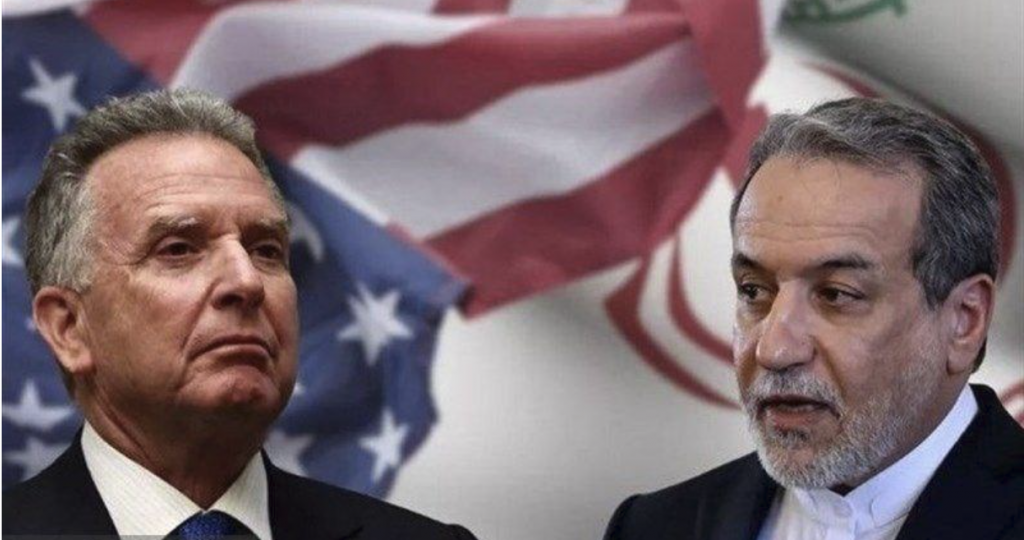
From this, certain assumptions can be made. Part of this package might include concessions—perhaps even concessions designed to persuade specific individuals or circles in the United States, including people close to Trump, to come to some form of accommodation with Iran. Another part could relate to Iran’s relations with Russia and China, or even changes in Iran’s economic structure in exchange for reducing or lifting some sanctions.
On the other hand, we know that Iran has firm and official positions on certain issues. For example, it insists on its right to enrich uranium and considers that right part of its national knowledge and national capital—something for which heavy costs have been paid. Yet at the same time, reports circulate that certain proposals have been discussed—for instance, suspending enrichment for three to five years, transferring 60-percent enriched uranium out of the country, or even keeping it inside Iran under some form of control to reduce its level.
These are among the fragments of information being discussed unofficially. Even in the previous period, Mr. Blinken, the former U.S. Secretary of State, had suggested that Iran at one point had even agreed to restrictions down to a very low level—close to below one percent.
Overall, it appears that within Iran’s ruling establishment there is a spectrum of viewpoints—from Mr. Khamenei himself to various currents, including some hardliners and, conversely, those who believe that to get through the current conditions, broader concessions must be made. This indicates that there is some readiness to offer concessions in order to move past the present situation.
In the end, as the saying goes, “Everyone became the companion of these negotiations according to his own assumption,” and interpretations have remained different and at times contradictory.
Some believe there is still an “opportunity”—an opportunity that might be created through a three-to-five-year suspension of enrichment inside Iran. As the proverb says, “From this pillar to that pillar, there is relief.” Meaning: perhaps in that interval, the political situation in the United States changes; perhaps Trump is no longer on the scene, or the far-right currents close to him weaken, and the decision-making atmosphere in Washington shifts.
On the other hand, there is also the view that in the next two or three years, the geopolitical situation of the region may change as well. Many believe—and we must be aware—that unless something completely unexpected happens in the region, within three to five years the dependence of countries such as Saudi Arabia, and even the European Union, on China’s economy will increase. China’s power, economically and militarily, will grow. Changes will also emerge in Europe’s policies that could, overall, weaken American power—and especially Israel’s influence in the region.
That is why the Israelis are exerting maximum pressure to push the United States toward war with Iran right now; because if time passes and the balance shifts against them, they will lose the current opportunity.
But if such a war happens, and Iran—just as it has said—targets U.S. bases in Arab countries of the region, those countries will inevitably enter the war. This must be said with certainty: if a missile from Iran hits Saudi Arabia or Qatar or the UAE—or even Turkey or Azerbaijan—they will respond, and they will react quickly and enter the war.
Right now they may be opposed to war and have no desire for it to occur; but if they are targeted by Iran and take a direct hit, they no longer have the option of staying out. In that case, the war becomes a regional war, and they too will enter the war against Iran.
And in the end, one point must be understood plainly: the final winner of such a war is Israel. Whoever survives on the surface—whether Iran, larger countries, or smaller ones—in reality the ultimate winner will be Israel. Especially the small countries on the Persian Gulf’s southern shores, which will be severely damaged; with a few missile strikes, people’s daily life and the political and social order there could effectively collapse.
For example, do not think Qatar is a country that could endure such conditions. If only twenty points in Qatar are struck by missiles, it becomes effectively paralyzed. Its ruling system also rests on a limited citizen population—perhaps three to four hundred thousand people—while its total population is slightly more than three million. And of course, 90 percent of that population consists of large numbers of migrant workers—Indians, Pakistanis, Bangladeshis, and other nationalities—who have no deep attachment to the country. In such a crisis, the possibility of internal unrest also exists: these large migrant and labor populations may rush toward major shopping centers, the homes of the wealthy, and urban infrastructure; the situation could spiral out of control, and the Emir of Qatar could easily become trapped in a crisis that leads to the regime’s collapse.
These countries are fundamentally so fragile that anyone who imagines they would “remain standing” in a regional war, in my view, is not looking at reality.
As for the UAE, we know it has around ten million people, but only close to one million are actual citizens. A large portion of those citizens have mostly lived in complete comfort—an affluent class raised with a luxury lifestyle, expensive cars like Lamborghinis and Porsches—and naturally they are not a force that can easily be drawn into a hard and prolonged war. This country too would likely lack the ability to withstand internal unrest during wartime.
It is true that these countries have advanced military equipment—modern aircraft such as the F-35, F-15, and F-16—but having equipment does not necessarily mean having a genuine war-ready force prepared for a large-scale confrontation. What is decisive is manpower, social cohesion, and readiness for war.
In this context, perhaps the only country that has, to some extent, the characteristics of a real war-fighting force is Saudi Arabia: a country with a larger citizen population, a clearer national and religious identity, and a claim to leadership in the Islamic world—given the Kaaba and its religious standing. If we look back, in the Afghan war against the Soviet Union and even later periods, part of the manpower and resources came from Saudi Arabia—financially and in terms of individuals who joined those conflicts, including Osama bin Laden and many other jihadist forces aligned with him.
Nevertheless, even Saudi Arabia, if drawn into a regional war, would face extremely heavy challenges and costs.
Perhaps the most fragile of these countries is Bahrain, with a large Shiite and Iranian-origin population, which in the past has repeatedly faced popular uprisings and has been suppressed by Saudi security and military forces. In such countries, the public reaction if a crisis like war erupts is unpredictable.
Therefore, my conclusion is that in such a scenario—if a broad war takes shape in the region—the ultimate winner will be Israel, even if others appear to suffer less damage or “remain standing.”
The United States usually acts from a distance: it strikes, then later recovers its costs in one form or another from the countries of the region, and advances its project. Personally, I do not believe a war will occur—I will explain why below. But if no agreement is reached, it seems that what Iran is currently raising overlaps, to a large extent, with what the United States is in practice focused on.
If you pay attention, Mr. Trump more than anything is focused on stopping “enrichment”—he repeats it constantly. Interestingly, his positions have gradually moved backward, unlike certain hardline currents that try to make the atmosphere appear more radical. In practice, his political stance has softened.
For example, in the peace initiative he raised, he said Iran’s place is missing and expressed hope that it would later join. Or Witkoff points out that Trump is surprised that even though he has presented only the “minimum” demands to Iran, Iran still does not accept them. All of this shows that Trump is trying to lower the level of tension.
But at the same time, it seems he is stuck at one point. Part of this may be due to incorrect calculations made earlier—for example, the assumption that widespread protests were forming inside Iran and the government was on the verge of collapse, and therefore more pressure could produce results.
On the other hand, it seems Israel has at times placed the United States in situations that made decision-making more complicated—engaging America on two fronts and narrowing its room for maneuver.
One of these cases was that at the start of that war scenario—which was said might unfold within ten to twelve days—the Americans were led to believe that Iran’s government would collapse quickly. They were told that by targeting military leaders, sensitive centers, missile defense systems, and launchers, they could disable Iran’s defensive structure. It was even imagined that the scale of the operation would grow larger and that, ultimately, within a short period, the system would fall apart and people would flood into the streets.
Later it was also said that if this immediate outcome did not happen, then over a period of months—say eight months—by intensifying pressures, internal protests would form, various centers would be targeted, the government would enter a phase of repression and, as a result, popular resistance would increase. In that scenario, the United States would also intervene. As has been quoted, Trump said, “Help is on the way”—and it seems that was not merely a slogan; they themselves believed such a path was achievable. In this framework, Israel’s role and even intelligence activities—such as those attributed to Mossad—were considered part of the scenario.
But in practice, this path also failed and did not produce results. If we want to summarize: two scenarios—one based on broad military pressure and another based on internal destabilization—both failed and did not reach their intended outcome.
In these conditions, it seems that now certain actors—especially Israel—may see this moment as a “last opportunity” to drag the United States into a more direct confrontation by any means. Their calculation may be that if Iran responds to U.S. bases or interests in the region, regional countries will also be forced into the war. As a result, many of those countries would be weakened and the regional balance of power would change sharply.
According to this analysis, in such a scenario Israel could occupy the superior regional position. Of course, it must be emphasized that these are interpretations and analyses about possible trends, and the future remains dependent on decisions and unpredictable developments.
You can see that even some American officials in this crisis period—including the foolish U.S. ambassador to Israel—have made statements, such as references to Israel’s territorial expansion, the “Promised Land,” and religious texts, which have been widely reflected and debated. In such conditions, the question arises: why did we not see broad street reactions in many Arab countries? It is true that the Arab League, on the official level, took a stance and condemned these foolish statements, but at the societal level, the wide protests one might expect did not take shape.
One reason seems to be these countries’ internal considerations. Many regional governments, even if they oppose war, are highly sensitive to street protests in their own countries and view them as potentially destabilizing. For that reason, they prefer reactions to remain within official and diplomatic frameworks, not in the form of large-scale popular mobilization.
At the same time, if civil and peaceful protests were to emerge at the level of public opinion, they could function as a kind of “display of social power”—showing that opposition to war is not merely a government position but also exists among the people. Such reactions could affect the political atmosphere and even the calculations of various actors.
But the reality is that in many countries of the region, a combination of political limitations, security concerns, and governance structures causes these kinds of social movements to appear less—or to be contained.
Overall, this too is part of the picture that must be considered in the broader analysis of regional conditions: the gap between official government positions, their fears of internal instability, and the potential—but constrained—role of public opinion in regional developments.
But why do I think there will be no war—I truly doubt it will reach an all-out war. As I have noted in previous writings and conversations, if you pay attention, Trump’s position has also changed and he has spoken of a “limited war.” This is exactly what I said earlier: if no agreement is reached, instead of a broad war, a limited, controlled, and tacitly agreed confrontation may take shape.
It seems the two sides will not reach a full agreement. On one hand, Iran has taken a tougher position and insists it is not ready to give essential concessions. At the same time, inside Iran a perception has formed that America’s previous pressures—that harsh, threatening tone—have retreated somewhat, and that if the other side stands firm, the U.S. will not necessarily go to war.
As a result, in my view, the belief has strengthened in Iran that “if you do not give concessions, no war will happen; but if you do give concessions, pressures may increase, and the end of the road will most likely be gradual retreat up to the final stage, which is collapse.” This has led the Iranian side to adopt harder positions and to show less inclination to retreat.
On the other hand, the support seen from Russia and China—politically and strategically—gives Iran confidence that it is not in complete isolation and can count on some form of backing.
Therefore, my conclusion is that the probability of reaching a comprehensive agreement is low, but at the same time the probability of a broad war is also low. What seems more likely is that if no agreement is reached, a limited and controlled confrontation will occur—a kind of tactical clash by both sides without turning into a full regional war.
It must be noted: Trump had not spoken of a “limited war” at all. Until last week—when Iran’s leader threatened a regional war—he did not have such a position. At that time his tone was that if there was no agreement, “we will make you miserable,” and threats of that kind.
But now it seems Trump has concluded that there will probably be no agreement, and at the same time he does not want to accept the cost of a broad war. So he has begun speaking of a “limited war”—a message to Iran that the confrontation can be controlled and kept at a low level—so to speak: “We hit you a few times, you respond, and it ends.”
But the Iranian side, for now, does not accept this framework. As Mr. Khamenei has said, if a war happens it will be “regional.” Meaning: Iran’s message is that there is no such thing as a limited war and any military action can become a broad confrontation across the entire region.
In my view, an important sign for understanding whether the two sides reach an “unwritten understanding” about a limited war is listening to these very words in the Iranian side’s rhetoric. If in the future you see that instead of emphasizing “regional war,” they begin speaking of “reciprocal response” or “proportionate action,” that could be a sign that a controlled framework has taken shape between the two sides. But if the Iranian side continues to insist that “any strike, by anyone, will be answered by expanding the war across the region,” then even the limited-war scenario will probably not be implementable, because the cost for the other side becomes too high—and none of the countries in the region is prepared to enter such a conflict.
In fact, it seems that a major part of the future of these tensions depends on the kinds of messages sent by Iranian politicians—how much they keep the level of risk high or lower it. As we have seen before, when the level of risk rises, the other side acts more cautiously; but if the risk is kept low, the other side may feel freer to act.
From this angle, the management of messaging, official language, and even media narrative-building becomes extremely important. For example, when talk of a “proposed package” appears, if information about it is not communicated correctly and in a timely manner, the space gets filled by anti-Iranian and external narratives. But if the framework and logic of these proposals are stated more clearly from the outset, it can have a better impact on the mental space, the other side’s calculations, and public opinion inside and outside Iran.
Overall, whether they move toward an agreement, whether tensions remain limited, or whether matters enter a more costly path depends largely on this game of messages, perceptions, and risk management by both sides.
In other words, efforts should be made to ensure that the media space is held by an independent discourse emerging from an Iranian perspective, rather than being shaped mainly by narratives built on threats, fear, and pressure. In my view, one of the serious weaknesses in Iran’s policymaking has been the lack of coherent and intelligent performance in the sphere of media and narrative-building, and this has left public opinion—inside Iran and across the region—exposed to narratives that do not necessarily arise from Iranian interests or an Iranian perspective.
In such conditions, if there is no active and purposeful narrative-building, it is natural that others will shape society’s mental space. That is why message management and effective media presence become highly important.
My final conclusion is that if Iran can act with a firm yet carefully calculated posture, the likelihood of war decreases. But if retreats occur without a clear framework, not only may concessions be lost, but the danger of escalating tensions will also remain.
But after all of this, what can my view—or the view of parts of the opposition that are not dependent on security services and foreign countries, especially the mercenaries of Israel—be, and how can this view be reflected?
First of all, there is the issue of war. We must state very clearly and explicitly that we oppose war. But this opposition to war does not mean that we defend the current situation in Iran. We oppose war because of its catastrophic consequences for the people of Iran. For me, first and foremost, people’s lives matter. War can make life dramatically harder, produce many victims, worsen the economy, and destroy infrastructures that are the product of decades of people’s effort and national capital. For this reason, I—and many of us—oppose war.
Now the question is how war can be prevented. If we look realistically, three main forces play a role here. We are neither the American side nor the Israeli side. But among these three forces, the first and most important is the Iranian government. The Iranian government can, through certain behaviors and decisions, prevent war.
In my view, as I have said before, if the Iranian government on the one hand maintains its firm posture and on the other hand enters into certain agreements that help reduce tensions, it can both prevent war and improve people’s living conditions. This means a kind of balance: preserving deterrence while also working to reduce pressures on people’s lives. If such a path is taken and people can experience a more normal life, that itself will benefit peace and stability in the future—regardless of which government is in power.
Strengthening Iranian society in terms of economic well-being, security, comfort, and preserving human dignity, and also reducing tensions that in the past led to repression and killing and could be repeated in the future, are all ultimately in the interest of the people of Iran.
The second issue is the opposition. We face a kind of opposition that in many cases suffers from despair, frustration, and fragmentation. When I speak of the opposition, I truly mean opposition forces—because at the same time there are groups who present themselves as opposition but in practice defend the government, sometimes even more than the government officials themselves.
I do not consider them opposition. They may have idealistic, socialist, communist ideas, or even certain understandings of democracy, but when in practice they seriously defend the Iranian government, they no longer fall within the framework of opposition. I am not making a value judgment that this is good or bad, but analytically these are forces aligned with and supportive of the system. Therefore, when we speak of the opposition, we must mean forces opposed to the Islamic Republic—inside and outside the country.
This shows how important it is to understand roles precisely and draw clear boundaries of positions. If those boundaries are not clarified, analyses also become confused and ultimately lead to wrong decisions.
In my view, the role of the opposition is to understand correctly what the consequences of war are. War not only leads to widespread destruction, it weakens civil society, destroys the middle class, and makes the situation of working people far worse. If the opposition imagines that under such conditions it can achieve results by organizing people, it must note that people who become poorer, more helpless, and more dependent will in practice rely more on existing structures. In such an environment, even the growth of extremist and violent currents—some of which also enjoy foreign support—becomes more likely, and in the end the hands of independent and popular forces become emptier.
Therefore, if the opposition truly opposes war, it must show this opposition actively—through protest, public education, and creating public-opinion pressure—just as pro-war forces try to amplify their voice. Only in an environment where a minimum degree of peace and stability exists is effective political activity and social organization possible.
A third and very important point is the economic situation and the grinding, erosive trend of people’s lives—a topic many political activists inside and outside the country have addressed again and again, and I too have always addressed in my conversations and writings. The reality is that even without war, if this trend continues, society will suffer serious erosion. The devaluation of the national currency, continuous increases in the cost of living, and growing economic pressure have made life harder every day. This trend alone can weaken social foundations.
Alongside this, the concentration of wealth in the hands of a limited minority—somehow tied to power structures—and the outflow of massive resources from the country have deepened economic and social gaps. If this continues, it can weaken overall structures.
Historical experience also shows that no system—even systems that appear very powerful—is immune from collapse. The most obvious example is the Soviet Union: a system many thought stable and enduring, yet it ultimately collapsed. Even some of the most prominent analysts and politicians did not foresee such an end.
Despite having nuclear weapons, the world’s largest army, a powerful intelligence service like the KGB, and a very broad Communist Party with tens of millions of members, the Soviet Union ultimately collapsed—largely under economic pressure and internal dissatisfaction. Therefore we should not imagine that economic crises are simple or ignorable; if they are not addressed, they can erode and ultimately collapse any system.
In this framework, if a government cannot respond to people’s economic and social demands and does not move toward strengthening society—welfare, security, and human dignity—it gradually weakens its own foundations. From this standpoint, even those with egalitarian or left tendencies, if they remain indifferent to this situation or defend it, are in fact in contradiction with the principles they claim to believe in.
Another issue that must be considered is the Islamic Republic’s ability to fight a regional war. It seems even Iranian officials themselves know well that entering such a war would carry extremely heavy costs. That is why when they speak of a “regional war,” they are in fact sending a deterrent message—that any confrontation could spread across the region, raise costs for all sides, and, in a sense, communicate a suicidal message to the outside world.
In such a scenario, the core message is that a confrontation will not remain limited and will expand in scope. But that itself shows that the risk is extremely high and could produce consequences that slip beyond the control of all sides.
The experiences of countries like Iraq, Libya, Syria, and Afghanistan also show that large-scale wars and military interventions, even when they lead to political change, do not necessarily lead to stability or improved conditions. In many cases, the result has been prolonged instability and the rise of more radical forces.
From this perspective, the main concern is that any escalation of conflict will not only weaken existing structures but also pave the way for forces that are harder to control and contain—especially in a region already facing deep tensions and fractures.
The Danger of Using Nuclear Weapons
Regarding discussions connected to extremely destructive weapons, what matters is that such scenarios—regardless of how likely they may be—reflect a high level of danger and potentially catastrophic consequences. It is precisely this level of risk that leads many international actors to try to prevent the expansion of conflict.
Ultimately, the conclusion is that entering a regional war could produce consequences far beyond initial calculations—consequences that would be costly and unpredictable not only for one country but for the entire region and even beyond it.
Finally, if we want to conclude precisely on the basis of this analysis, I must emphasize one more key point: the danger level in these conflicts could reach the point where nuclear weapons enter the picture, and that fact shapes the behavior of the actors.
In my view, if the dimensions of these clashes continue beyond expectations and military pressure on Israel becomes unbearable, there is a possibility that Israel, as a last option, would place the use of nuclear weapons on the table. I do not think this option should be treated as a distant scenario, but as a “real threat”—a threat that could change the entire equation.
In my view, Iran may have accepted an immediate ceasefire in the 12-day war due to fear of, or direct threat from, precisely such a scenario—the possibility of a nuclear strike—even when, on the surface, its battlefield position was far better than the enemy’s and it was even exerting severe pressure on Israel in certain areas. In other words, perhaps it is better to interpret accepting the ceasefire not necessarily as an immediate weakness, but as fear of the conflict entering an uncontrollable phase.
On the other hand, Saudi Arabia’s action in signing a nuclear agreement with Pakistan is also analyzed within this framework. That is, it is understood that regional countries, after observing this level of risk, have concluded that they must prepare for more extreme scenarios—including the possibility of nuclear weapons use—and seek to create a form of deterrence for themselves.
Overall, this analysis rests on the view that if a regional war continues, there is a possibility of crossing very serious red lines—including the use of nuclear weapons—and that this possibility is one of the determining factors in the decision-making of the main actors.
On this basis, war for Iran is viewed as entering a path of self-destruction: a path that can lead to widespread devastation, high human casualties, and an uncertain future for society. From this standpoint, the most important hope is that such a scenario does not occur at all, because the principal cost will be paid by the people.
Here I must say that contrary to the analysis of many supporters of the Islamic Republic, or media analysts, the destruction of Israel in such a war is not practically possible. Israel is a country with a significant nuclear arsenal, and it is said that in the worst scenarios, if Israel’s existence faces a serious threat, they not only might—but have even threatened—to resort to extremely destructive tools. This level of risk, especially in the view of some analysts, is one of the important deterrent factors.
For this reason, I believe the Islamic Republic, due to awareness of these extremely heavy consequences, will not move toward a “strategic suicide,” because its costs for the entire country and region would be unbearable.
In closing, I must say: we must avoid scenarios that lead to uncontrolled escalation of conflict, because along such paths there is not only no certain victory, but the danger of widespread and lasting damage to our people and our country is extremely high—and irreparable.
Reza Fani Yazdi
February 25, 2026